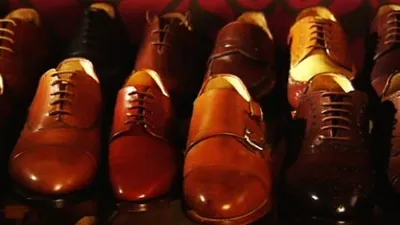
Footwear is a crucial element of men’s fashion. It started as a practical accessory, but it has evolved into a statement piece over time. In the Renaissance, men’s shoes became an indicator of social status. High heels and elaborate designs were the norm for upper-class men.
Table of Contents
21st Century
As we enter the 21st Century, trends in mens shoes have taken on a new role as a symbol of personal style and self-expression. Sneakers are no longer reserved for athletic endeavors, with high-fashion brands collaborating with sneaker companies to create limited-edition styles.
While the Victorian era saw a shift towards practicality, it also gave rise to the Oxford shoe—a sleek style that remains popular today. These shoes feature closed lacing and a low heel, making them an elegant choice for formal occasions. In the 21st Century, footwear continues to evolve, with designers introducing new materials and designs to keep up with changing consumer trends.
20th Century
The 20th Century saw men’s footwear become more fashionable. Shoes tended to be adorned with bold colors and decorative touches and became associated with specific cultural movements, such as rockers and jazz/soul musicians. At this time, shoemaking shifted from being an art form to becoming more of a factory-based industry. It allowed for higher production and distribution of shoes to a broader audience. Short lace-up Oxford shoes remained a popular choice of dress shoes for gentlemen, while working-class men preferred boots. Foot binding also continued into the modern era but gradually became less common.
18th Century
In the 18th Century, men’s footwear began to change dramatically. As the Century progressed, wigs fell out of fashion, and shoes became less bulky and more elegant. By the 1700s, shoes had a narrower, more pointed toe and were more closely matched to dresses. Footwear was becoming less generic and more individualized, reflecting the emerging ideas of individualism and fixed notions of gender that dominated the period. In contrast, theories that insisted on their innate inferiority still influenced women’s shoes.
19th Century
By the end of the 19th Century, the industrialization of shoemaking shifted the emphasis away from traditional handicrafts and into mass production. It also led to the introduction of new materials and styles. While plebeian footwear remained bulky and unwieldy, the shoes of the elite molded to their frames, expressing their natural authority in a masculine silhouette. As the world moved toward fixed modern notions of gender, rank, and class, boots became less equipment and more clothing. This period also saw the rise of short lace-up Oxford shoes that were easier to put on and take off than the long laced boots.
17th Century
The 17th Century saw shoes develop into a distinct fashion statement. The upper classes wore shoes and boots with moderately high heels, often decorated with ribbon lace. They could be secured with buckles or lace ties. By the end of the Century, however, the styles began to split along gender lines. Men preferred square-toed shoes, while women chose pointed styles that sometimes curved upwards like a hook. The era was also marked by a return to practicality and protection, with shoes worn as overshoes to protect them from puddles and other debris. The style became known as a ‘poulaines.’
Renaissance
The Renaissance, or the period of humanism that began in Italy, brought gradual changes to men’s footwear. These resulted from a revival of Roman and classical Greek philosophy and art. In the upper class of society, shoes became elongated and extreme in design, known as poulaines. However, they were not practical for everyday wear because of their long pointed tips, which could catch on the bottoms of trousers. Lower-class men were also prohibited from wearing them due to Sumptuary Laws that stipulated that only royalty and high-ranking noblemen could wear such shoes.
Medieval Times
In medieval times, men’s shoes were more of a status symbol than a functional necessity. They were adorned with elaborate adornments and fashioned of expensive materials. Atlas Obscura reports that crows, or ‘poulaines,’ with elongated pointed tips became fashionable in the fourteenth and fifteenth centuries. These shoes were stuffed with moss and other organic material to erect the points. Peasants often wore wooden patterns over their softer footwear or even went barefoot. Their footwear reflected their simple lifestyles and respectable social standing, often with modest adornments for the clergy.